A Structural Health Index you can explain.
Durability, displacement, surface and age, weighted into one 0–100 number and an A–E grade, with every deduction visible.
Weights
Four drivers, fixed weights.
40%
Durability · carbonation, chloride and cracking probability
30%
InSAR displacement · settlement rate and angular distortion
15%
Surface and steel · freeze–thaw and atmospheric corrosion
15%
Age · versus design life
If InSAR is not yet measured, the index uses durability, surface and age only and says so.
Grades
A to E, from good to severe.
| Grade | SHI | Suggested action |
|---|---|---|
| A · Good | 85 and above | Keep the routine inspection cycle |
| B · Watch | 70 and above | Focus the next routine inspection on the top drivers |
| C · Caution | 55 and above | Bring the detailed inspection forward |
| D · Alert | 40 and above | Expert survey or site check recommended |
| E · Severe | below 40 | Arrange an expert survey first and report to the owner |
A screening grade, not a statutory condition grade.
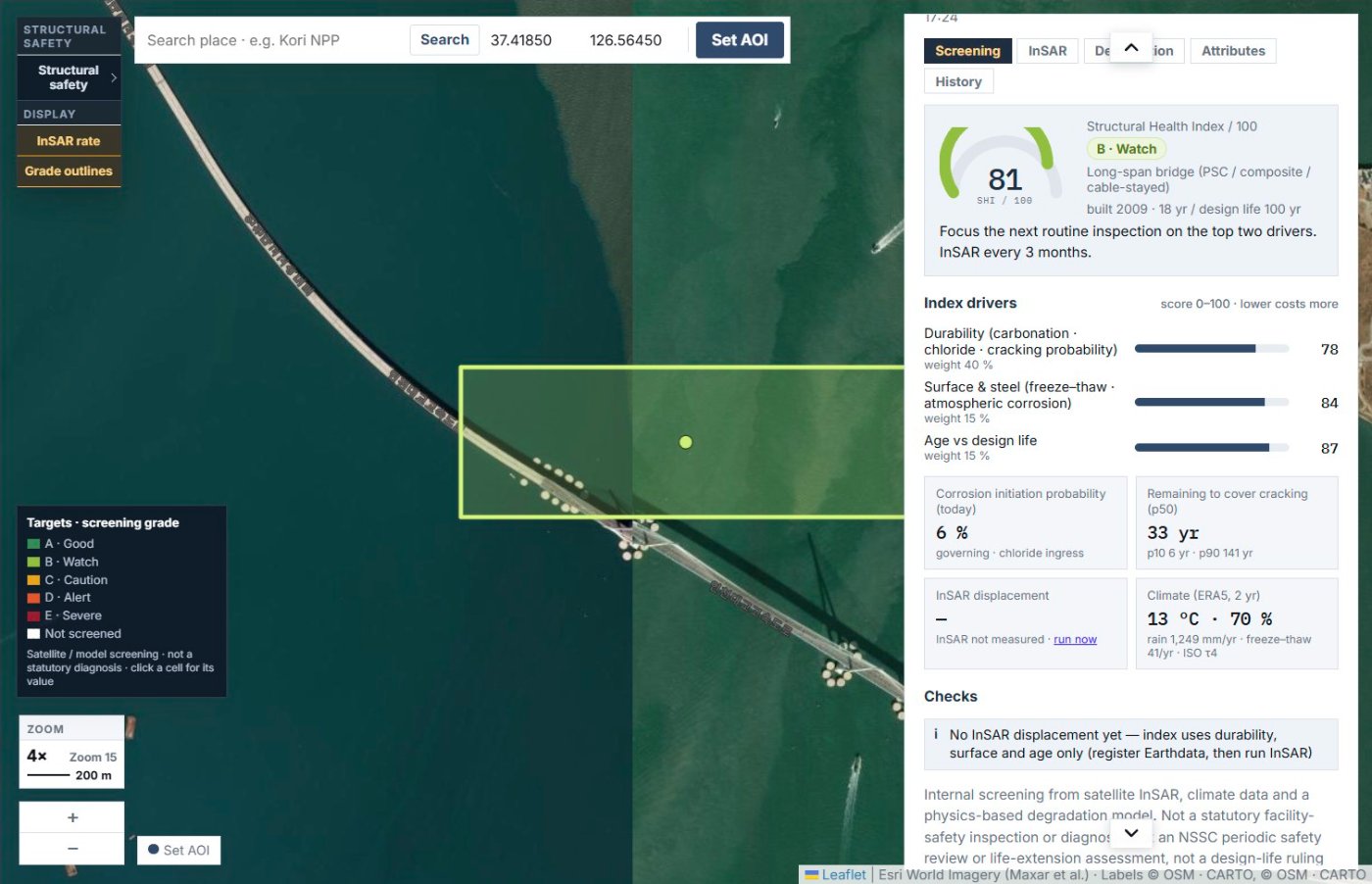
In the app
Every deduction, on one panel.
The screening tab shows the index, the grade, each driver’s score and weight, today’s probabilities, the remaining life and the checks to make next.
FAQ
Frequently asked questions
Is the SHI grade a statutory safety grade?
No. It is an internal screening grade, not a statutory condition or safety grade. It is used to decide the order of inspections.
Can the weights be changed?
The default weights are durability 40%, InSAR 30%, surface 15% and age 15%. Adjustments to your own criteria can be agreed during a pilot.
Related pages
Work with us
Start with a screening pilot.
No equipment on site. We screen your structures from public satellite and climate data first, then compare the priority list with your own inspection and survey results.