How PILLAR works.
Satellite radar, climate data and engineering models, in five automatic steps.
Five steps
From one satellite pass to an inspection priority.
Before a single sensor goes on site, screen the whole portfolio with satellites and climate data that already exist.

Step 01
Collect
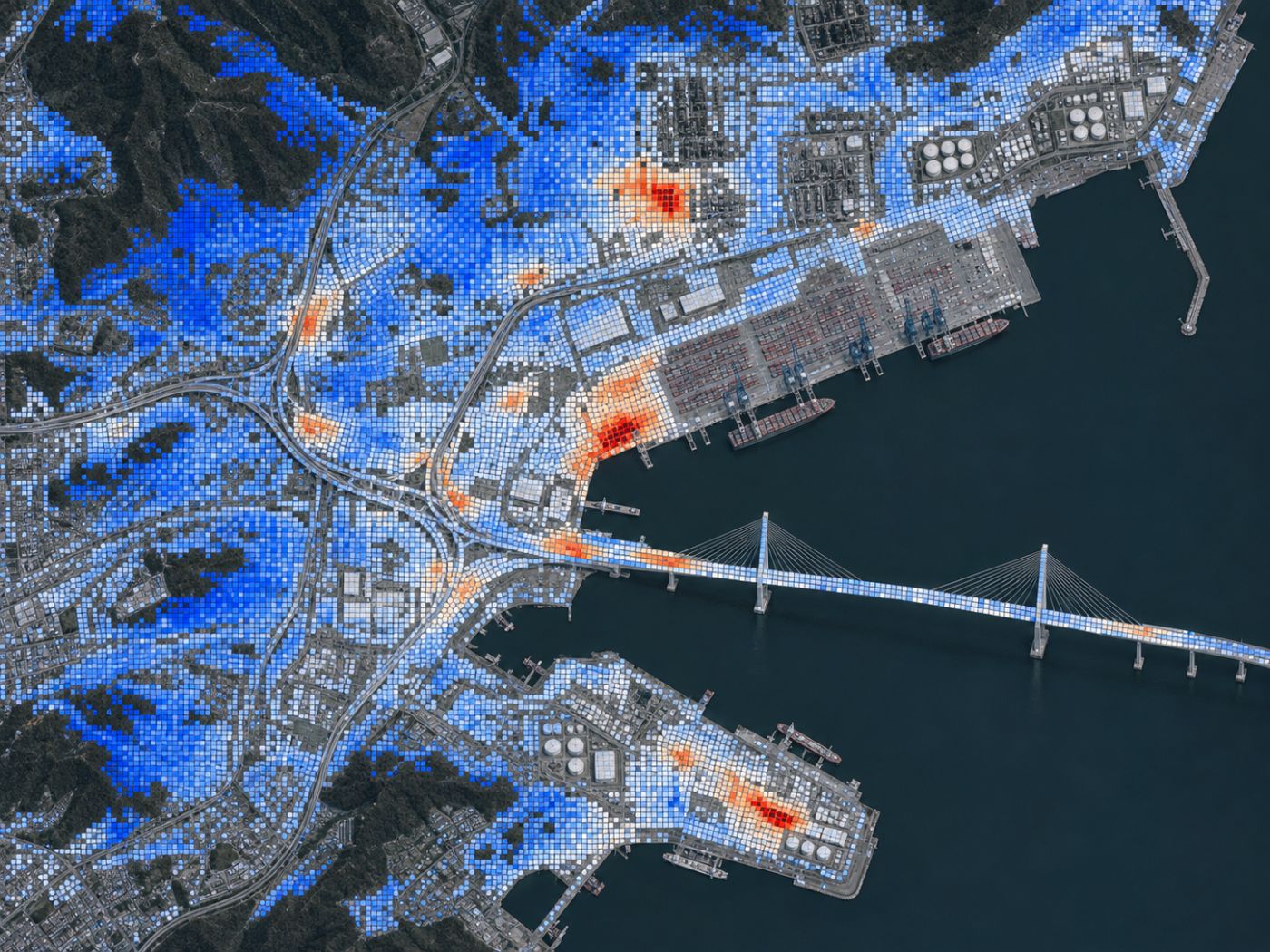
Register a structure zone and PILLAR collects Sentinel-1 pairs (public ARIA GUNW or generated on demand via ASF HyP3) and ERA5 climate data for it automatically. NISAR and commercial SAR are ready.
Step 02
Displacement series
Per 80 m cell: cumulative displacement series, yearly velocity with uncertainty, accelerating cells and a TimesFM six-month forecast, checked against structure-type screens.
Step 03
Degradation AI
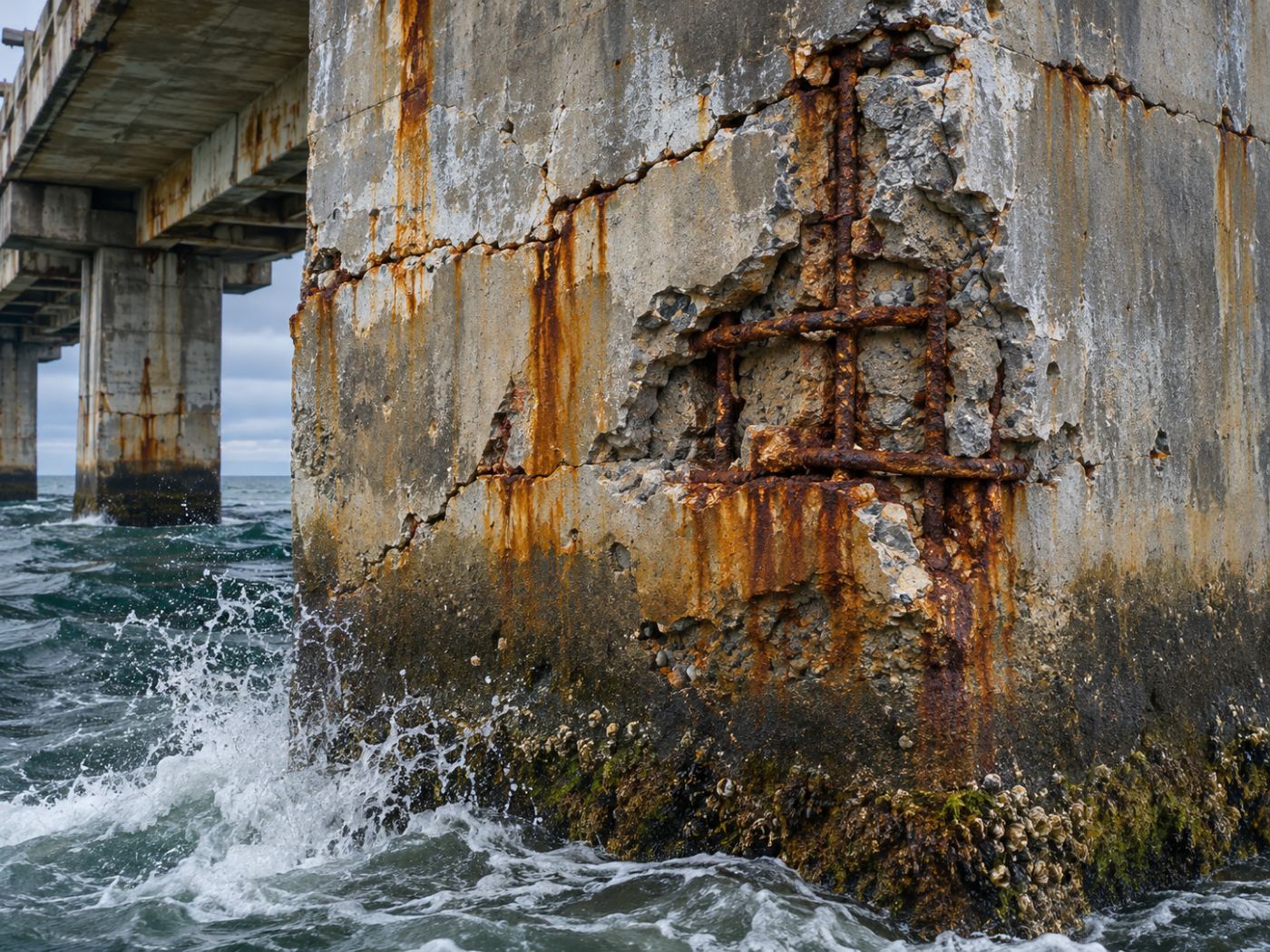
Carbonation, chloride, corrosion propagation, freeze–thaw and atmospheric corrosion models run through a 600-draw Monte Carlo for today’s probabilities and remaining life.

Step 04
Health index
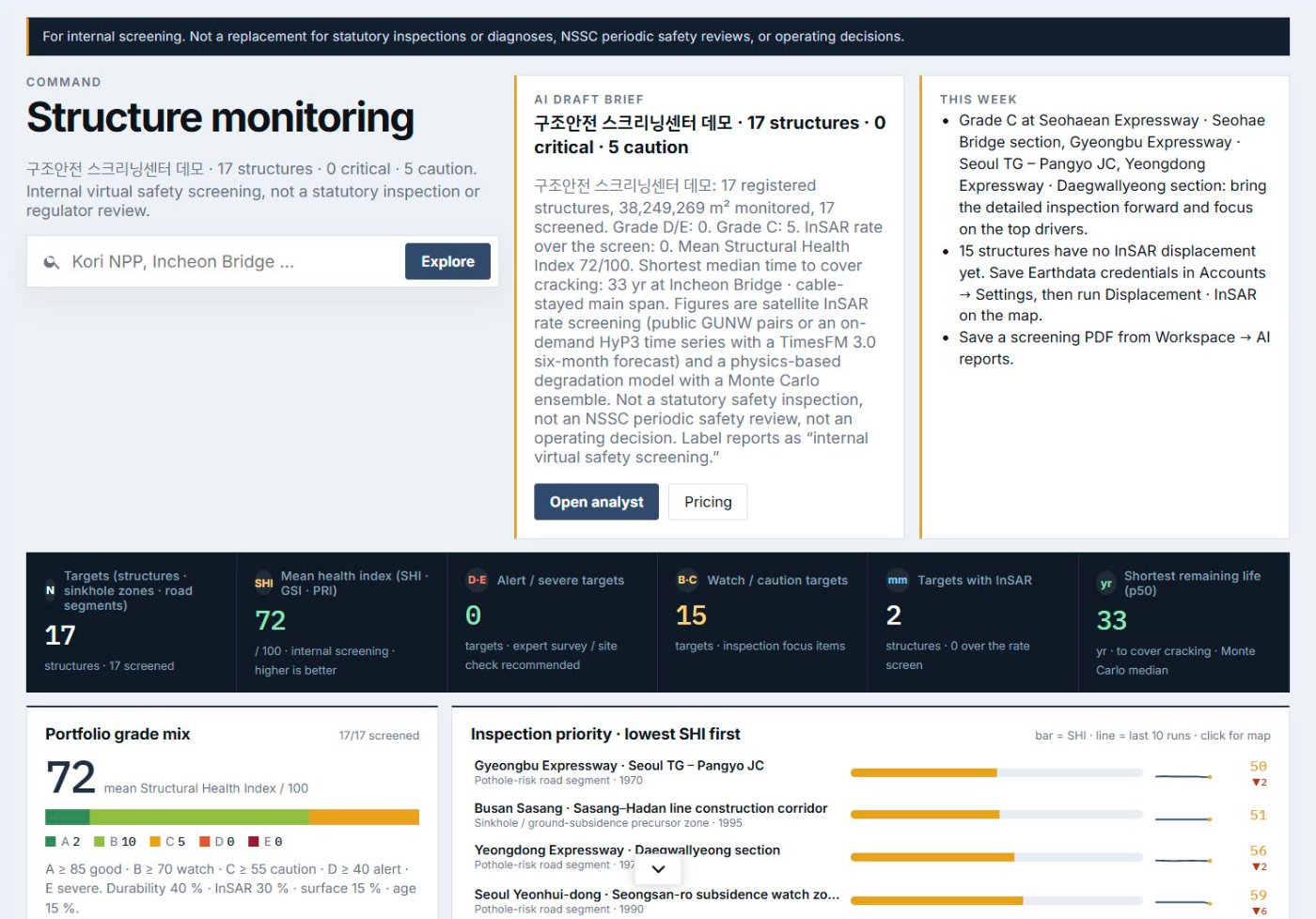
Durability, displacement, surface and age are weighted into a 0–100 SHI with an A–E grade, per-driver deductions and checks.
Step 05
Report & act
Inspection priority, an action queue, Korean/English PDFs and an AI draft brief. Licensed bodies do the diagnosis; PILLAR decides where to look first.
Key numbers
Built on public data and published models.
80 m
InSAR cell (HyP3 20×4 looks) · 12-day revisit
600×
Monte Carlo degradation ensemble · p10/p50/p90
7
structure-type rate and angular-distortion screen sets
6 mo
TimesFM displacement forecast · 10–90% band
FAQ
Frequently asked questions
How long does one screening take?
With public pairs and cached climate data, usually seconds. If new pairs are ordered through HyP3, each takes about 20–40 minutes and is read in automatically when finished.
Why is an Earthdata account needed?
Sentinel-1 pairs and HyP3 orders are accessed with a NASA Earthdata account. You connect your organisation’s account during onboarding.
Related pages
Work with us
Start with a screening pilot.
No equipment on site. We screen your structures from public satellite and climate data first, then compare the priority list with your own inspection and survey results.